
Vat dyes belong to the insoluble anthraquinone class (indigo is an indole class) dyes, which are insoluble in water and need to be transformed into soluble chromophores in an alkaline reduction system. After dyeing cellulose fibers, they are oxidized and the insoluble dyes are re precipitated and fixed inside the fibers. They are the category with the best comprehensive color fastness performance among cellulose fiber dyes.
Vat dyes are suitable for cellulose fibers such as cotton, viscose, modal, linen, jute, and their blended fabrics; Not suitable for protein fibers such as wool and silk (strong alkaline reduction bath can damage protein fibers). In the polyester cotton blend system, it can be matched with dispersed dyes and used in a step-by-step/same bath process to color the cotton and polyester components separately.
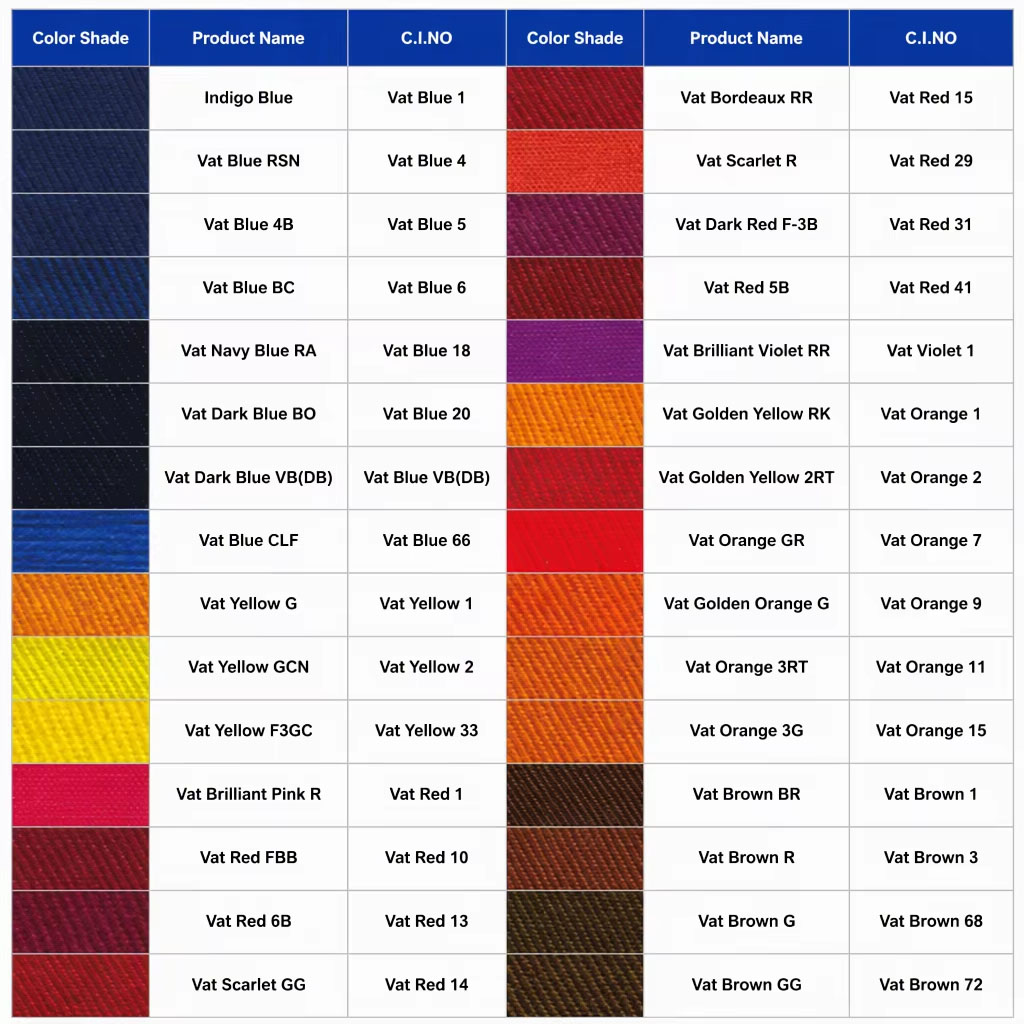
Vat dyes Process and selection advantages:
Complete chromatography, prominent in dark colors (black, navy blue, olive green); Light colored varieties have high costs and are rarely used.
The dyeing process is long, requiring insurance powder as a reducing agent and a strong alkaline environment.
The equipment requirements are high, and the production cost is higher than that of reactive dyes.
Fastness advantages: top-notch resistance to sun exposure, soap washing, and chlorine bleaching;
Wet rubbing fastness is affected by dye particle size and post-treatment process.

Contact person: Miss Jessie Geng
Email:jessie@xcwychem.com
Mobilephone/Whatsapp: +86-13503270825
Post time: Oct-10-2026


