
Choosing the inorganic pigment dispersant is a system matching process that requires consideration of the following factors:
1. Pigment properties:
·Surface chemistry: the acidity, alkalinity, and polarity of pigment surfaces. Acidic surfaces (such as silica) are suitable for alkaline anchoring groups; Alkaline surfaces (such as zinc oxide) are suitable for acidic anchoring groups.
·Specific surface area: The larger the specific surface area (the smaller the particle size), the more dispersant is usually required.
2. Dispersion medium:
·Water based or solvent based: determines the type of dispersant.
·Resin system: The dispersant must be compatible with the resin system, otherwise it may cause defects such as flocculation, loss of gloss, and shrinkage.
3. Final performance requirements:
·Glossiness: It needs to be completely dispersed to avoid flocculation.
·Transparency: requires excellent dispersion stability to prevent coarsening.
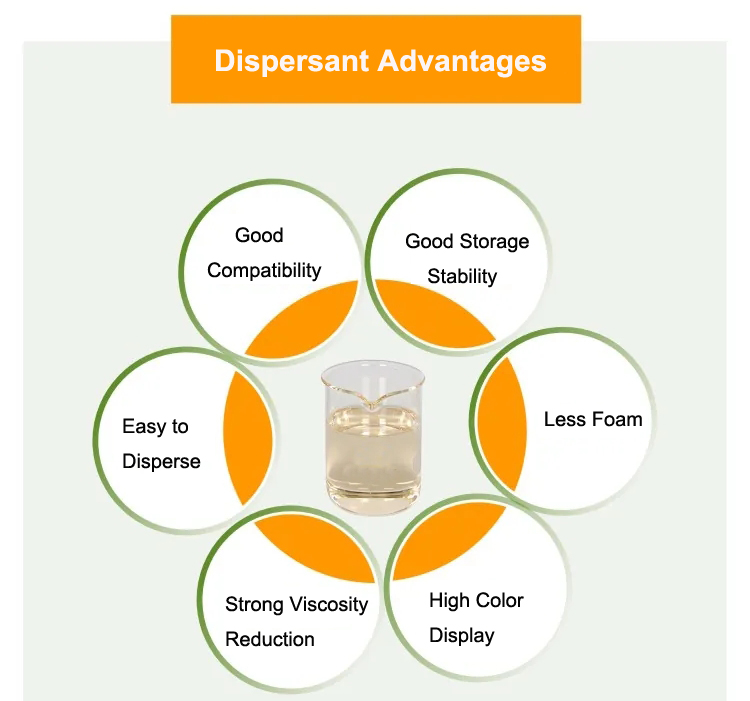
·Storage stability: Dispersants are required to provide long-term space or electrostatic stability.
·Coloring power: Adequate dispersion can maximize coloring power.
4. Addition amount and cost:
·There is an optimal amount of addition. Insufficient dispersion leads to instability; Excessive wetting can lead to excessive wetting, coagulation, or affect the water resistance of the paint film. It needs to be determined through experiments such as flow plate method, viscosity method, and coloring force method.

Contact person: Miss Jessie Geng
Email:jessie@xcwychem.com
Mobilephone/Whatsapp: +86-13503270825
Post time: Jan-08-2026


